Showing posts with label Television. Show all posts
Showing posts with label Television. Show all posts
Sunday, January 22, 2012
"The West Wing" Holy Land Map
A Palestinian friend of mine linked to the clip above on Facebook, and I later saw it pop up on various anti-Israel sites. In case the video disappears due to copyright infringement, here's a description: The clip shows the fictional President Bartlett of "The West Wing" receiving a 1709 map of what is now Israel, which is titled "Palestine/Canaan/Holy Land", but does not mention Israel. The president loves the gift and wants to put it up on the wall, but his staff members are afraid of the political and diplomatic fall-out.
The anti-Israel crowd seems to love this clip. I love this clip, too, but not for the same reason. Anti-Zionists might see this clip as suggesting that the area doesn't belong to the Jews, because Israel didn't exist before 1948, but the geographical designation "Palestine" did. Also, they might see it as suggesting that the Israel Lobby is so powerful that the president can't put up such a benign map.
I don't think the clip is necessarily suggesting any of that. It's brilliant because it shows how politically charged history and geography can be. The way you teach history and the way you draw maps (both in how you label them and the boundaries you mark) is bound to piss someone off. It could have been a map of the UK, showing all of Ireland as part of it, or a map labeling present-day India, Pakistan and Bangladesh as one united India, or any other explosive situation. Perhaps they chose Israel as the best-known example, or because it would make sense for a Christian to want to put up a map of the Holy Land, but not of another foreign region of the world.
Wednesday, August 10, 2011
ThunderCats and Democracy
A new ThunderCats* series has started airing in the States. This reminded me of the fact that three of my favorite shows - ThunderCats, He-Man and She-Ra - all had magical sword-yielding princes as their heroes. As an adult, I'm not crazy about the idea of shows teaching kids that there are certain people who were born to lead, due to the fact that they were born to the right families.
I've read that the new ThunderCats show has changed a lot of the elements of the original. For instance, Lion-O is no longer a kid trapped in an adult's body. He's a teenager now. However, he is still the Lord of the ThunderCats, just because his father was king. The show is about him learning the leadership skills required of a man in his position.
If it were up to me, I'd change the storyline to something more democratic. I'd start the new show with Lion-O's father declaring the end of the Thunderan monarchy and a transition to a democratic republic. One aristocratic ThunderCat does not want to lose the privileges of power, and schemes to become king himself. However, he can't do it alone, so he calls the mutants, who do a bit of overkill. They destroy the planet, leaving the traitor without a kingdom.
Lion-O and his fellow ThunderCats flee to Third Earth, where he is not expected to become a leader, because of his father's wishes to end the monarchy. However, he still wants to learn leadership skills, because he'd like to earn the leadership position, rather than inherit it.
Wouldn't that be a better, more democratic and educational version?
* As you may have noticed, my logo includes the ThunderCats' Sword of Omens. No deep thought went into choosing the elements of the logo. If I remember my thought process, I wanted a pen and a sword, but since I knew that wasn't very original, I wanted the sword to be special. So, I thought of television shows I liked as a kid. I don't remember why I didn't use the sword from He-Man and the Masters of the Universe, which inspired this blog's title. Perhaps it wasn't distinctive enough, so I chose another 80's favorite - ThunderCats.
I've read that the new ThunderCats show has changed a lot of the elements of the original. For instance, Lion-O is no longer a kid trapped in an adult's body. He's a teenager now. However, he is still the Lord of the ThunderCats, just because his father was king. The show is about him learning the leadership skills required of a man in his position.
If it were up to me, I'd change the storyline to something more democratic. I'd start the new show with Lion-O's father declaring the end of the Thunderan monarchy and a transition to a democratic republic. One aristocratic ThunderCat does not want to lose the privileges of power, and schemes to become king himself. However, he can't do it alone, so he calls the mutants, who do a bit of overkill. They destroy the planet, leaving the traitor without a kingdom.
Lion-O and his fellow ThunderCats flee to Third Earth, where he is not expected to become a leader, because of his father's wishes to end the monarchy. However, he still wants to learn leadership skills, because he'd like to earn the leadership position, rather than inherit it.
Wouldn't that be a better, more democratic and educational version?
* As you may have noticed, my logo includes the ThunderCats' Sword of Omens. No deep thought went into choosing the elements of the logo. If I remember my thought process, I wanted a pen and a sword, but since I knew that wasn't very original, I wanted the sword to be special. So, I thought of television shows I liked as a kid. I don't remember why I didn't use the sword from He-Man and the Masters of the Universe, which inspired this blog's title. Perhaps it wasn't distinctive enough, so I chose another 80's favorite - ThunderCats.
Friday, July 01, 2011
The Right to Call the President a Dick
MSNBC political analyst Mark Halperin has been suspended from the network for commenting on live TV that President Obama behaved like a dick at a press conference the other day. I'm not quite sure what the suspension is about. Is it the use of the word "dick", which might wound the delicate eardrums of viewers? Is it made worse by the fact that the slur was used to describe the president of the United States of America? Would it have been better if Halperin had said one of these words or phrases instead: douche, cocky, arrogant, smart aleck or smarty pants?
When it comes to free speech, America is very weird. It protects Nazis' rights to march in Jewish areas, gratuitous violence, depictions of cruelty toward animals and considers money as protected speech, yet you can't say some very basic, everyday words on network television and on basic cable. The word "dick" should not get someone suspended, even on a morning show.
When it comes to free speech, America is very weird. It protects Nazis' rights to march in Jewish areas, gratuitous violence, depictions of cruelty toward animals and considers money as protected speech, yet you can't say some very basic, everyday words on network television and on basic cable. The word "dick" should not get someone suspended, even on a morning show.
Wednesday, May 18, 2011
Brothers & Sisters Blood Type Goof
Here's one of those rare posts where I write about something completely unimportant. In this case, the silly television show "Brothers & Sisters". If you are willing to read some nitpicking, and have watched Episode 14 of the fifth and final season, or don't mind seeing spoilers about it, go on reading.
Thursday, March 03, 2011
Autism Doc on Israeli TV
"This Is My Child", a documentary about five families with autistic children, aired last night on Channel 2. Aviv Horowitz, whose son has autism, made the film after the drama series "Yellow Peppers" got good ratings, and decided to take advantage of the momentum to spread awareness of the subject. He seems to have been successful. The ratings were excellent - 21.6%, which is quite high for the 11 PM time slot. The movie itself was also very good.
The children in the film range from classic low-functioning autism, to high-functioning PDD-NOS. The kid who seems to be functioning best was even seen singing with Aviv Geffen, one of Israel's best known singers, and he explained that most kids have a book in their heads that tells them how to make friends and interact socially, and kids like himself also have that book, but it's closed. I found that to be an apt description.
The mother with the lowest functioning child expressed anger at the PDD's, as if they won something. I can understand her. I guess I'd be envious of those kids if my own nephew was like her son.
Good doc. I hear more articles on the subject are upcoming in the media. I'm glad. The more awareness to the subject, the better services will be available for autistics. Maybe.
The children in the film range from classic low-functioning autism, to high-functioning PDD-NOS. The kid who seems to be functioning best was even seen singing with Aviv Geffen, one of Israel's best known singers, and he explained that most kids have a book in their heads that tells them how to make friends and interact socially, and kids like himself also have that book, but it's closed. I found that to be an apt description.
The mother with the lowest functioning child expressed anger at the PDD's, as if they won something. I can understand her. I guess I'd be envious of those kids if my own nephew was like her son.
Good doc. I hear more articles on the subject are upcoming in the media. I'm glad. The more awareness to the subject, the better services will be available for autistics. Maybe.
Sunday, February 06, 2011
More Celebrities Searching For Roots
An now, for the occasional non-political post on an unimportant (but interesting) subject:
I've seen three versions of the genealogy documentary series "Who Do You Think You Are": I've seen all the episodes of the Israeli version, the first season of the American version, and just one episode of the original BBC series. That one episode of the British show was about Kim Cattrall and her search for her long-lost grandfather, who had abandoned his family when her mother was a young child.
A few days ago, the American version returned to NBC for an 8-episode second season. Interestingly, Kim Cattrall is one of the subjects of this season, and according to Executive Producer Lisa Kudrow's description of Cattrall's story, it looks like they're just re-airing the two-year old episode from the BBC. My guess is that they're going to do some editing, like replacing the British narrator with an American one, and making a slightly more emotional, commercial version than the drier, more strictly documentary-like British origin.
It seems odd to me that the show is recycling an episode from the British version and claiming it as an episode of the new version. Why not announce: "And here, between seasons of the NBC show, let's show you a few episodes from the original BBC series of interest for Americans."
I've seen three versions of the genealogy documentary series "Who Do You Think You Are": I've seen all the episodes of the Israeli version, the first season of the American version, and just one episode of the original BBC series. That one episode of the British show was about Kim Cattrall and her search for her long-lost grandfather, who had abandoned his family when her mother was a young child.
A few days ago, the American version returned to NBC for an 8-episode second season. Interestingly, Kim Cattrall is one of the subjects of this season, and according to Executive Producer Lisa Kudrow's description of Cattrall's story, it looks like they're just re-airing the two-year old episode from the BBC. My guess is that they're going to do some editing, like replacing the British narrator with an American one, and making a slightly more emotional, commercial version than the drier, more strictly documentary-like British origin.
It seems odd to me that the show is recycling an episode from the British version and claiming it as an episode of the new version. Why not announce: "And here, between seasons of the NBC show, let's show you a few episodes from the original BBC series of interest for Americans."
Sunday, December 19, 2010
Yellow Peppers: A New Israeli Drama About Autism
"Yellow Peppers" is a new series about a family of farmers in the Arava Desert in southeastern Israel. In the debut episode, which aired yesterday, the family is confronted with the possibility that something might be wrong with their five year old child, Omri. The boy's uncle returns from Tel-Aviv to the farm with his wife Yael, a doctor who had cheated on him. When she talks to Omri, she sees something wrong and tells her husband, who accuses her of saying this only to feel important. It is then revealed that the kid was taken to a specialist two years earlier, at Yael's suggestion, and the specialist didn't see anything wrong.
Also, when Ayelet, Omri's mother, asks his kindergarten teacher point blank whether he needs to be checked out, the teacher says yes, "but don't worry, he's adorable". Ayelet asks why she never said anything, and the teacher says that she did, she had previously said he's "special", "not like everybody else", which Ayelet had taken as compliments. Like in many cases in real life, the teacher only had the guts to speak in code, not to outright tell a parent there might be something wrong.
It is a very realistic series, based on the experiences of the show's writer as a mother of an autistic son. A lot of things reminded me of what happened in my own family when we first thought my nephew might be autistic. In the show, the grandfather gets yelled at for taking his grandson to a child development specialist without asking his daughter and son-in-law. My mother got her head bitten off when she first suggested to my sister that my nephew should be checked out.
"He's a very confusing child," says Yael when she calls a colleague to ask for the name of a specialist. That's what we've always said about my nephew. He always seemed like a genius, another word attributed repeatedly to Omri. As a two year-old he didn't speak, but he could repeat very complicated words, could spin dreidels masterfully and was fascinated by spinning things. That's also why he was obsessed with CDs. On the show, Omri is also obsessed with CDs, but for a different reason - he sings different adult songs, knows exactly what their name is, who performed them, and which album and year they're from. Most of the songs are inappropriate for his age, like a song about suicide. Despite knowing all this stuff, he doesn't seem able to hold a simple conversation.
I look forward to seeing the rest of this show. I hope it continues to be as good as its first episode, and that it gets good ratings, and Israelis will realize that autistics aren't the head-banging, screaming stereotypical menaces many believe them to be.
Also, when Ayelet, Omri's mother, asks his kindergarten teacher point blank whether he needs to be checked out, the teacher says yes, "but don't worry, he's adorable". Ayelet asks why she never said anything, and the teacher says that she did, she had previously said he's "special", "not like everybody else", which Ayelet had taken as compliments. Like in many cases in real life, the teacher only had the guts to speak in code, not to outright tell a parent there might be something wrong.
It is a very realistic series, based on the experiences of the show's writer as a mother of an autistic son. A lot of things reminded me of what happened in my own family when we first thought my nephew might be autistic. In the show, the grandfather gets yelled at for taking his grandson to a child development specialist without asking his daughter and son-in-law. My mother got her head bitten off when she first suggested to my sister that my nephew should be checked out.
"He's a very confusing child," says Yael when she calls a colleague to ask for the name of a specialist. That's what we've always said about my nephew. He always seemed like a genius, another word attributed repeatedly to Omri. As a two year-old he didn't speak, but he could repeat very complicated words, could spin dreidels masterfully and was fascinated by spinning things. That's also why he was obsessed with CDs. On the show, Omri is also obsessed with CDs, but for a different reason - he sings different adult songs, knows exactly what their name is, who performed them, and which album and year they're from. Most of the songs are inappropriate for his age, like a song about suicide. Despite knowing all this stuff, he doesn't seem able to hold a simple conversation.
I look forward to seeing the rest of this show. I hope it continues to be as good as its first episode, and that it gets good ratings, and Israelis will realize that autistics aren't the head-banging, screaming stereotypical menaces many believe them to be.
Friday, May 14, 2010
"Lost": Thoughts and Theories About "Across the Sea"
The "Lost" finale is just nine days away. I watched "Across the Sea" last night and I have some spoilery stuff to say about it, so if you haven't seen it, don't read the rest of this post.
Saturday, April 10, 2010
"Lost" Theorizing: What the Timelines Are
If you haven't watched "Happily Ever After", the eleventh episode of the sixth season of "Lost", you might not want to continue reading. Spoilers ahead.
Monday, March 01, 2010
Finding Roots on Television
My previous post was about a new NBC show, "Parenthood", which reminded me of another new show about to debut on that much-maligned network on Friday, March 5. Every episode of "Who Do You Think You Are", a documentary series based on a British show of the same name, takes a different celebrity on a journey to find their roots and uncover unknown facts about their ancestors. Several international versions of this show have been produced in different countries, including in Israel.
I've been fascinated with the Israeli version, where every episode and every celebrity's story and reactions have been very different, even in cases when there were similar family histories (two stories included ancestors serving in the Hungarian Labor Battalions, and in all four episodes that have aired so far, the story of at least one side of the family involved the Holocaust). The episode with comedian Tal Friedman was laugh-out-loud funny, while other celebrities were more somber. Friedman retraced his mother's steps as a young child running across the French-Swiss border alone, only with an even younger boy by her side. Actor Ohad Knoler discovered that one of the scenes in "Munich", a film he appeared in, was filmed in a building designed by his own great-uncle and once owned by his family. Journalist Gabby Gazit discovered the horrible conditions both his parents lived through during the Holocaust. Writer Shifra Horn discovered she was descended from the Moroccan rabbi who re-awakened the Jewish community in Buchara, Uzbekistan. Each one of these celebrities discovered much more information about their families.
Two episodes are left. The promo for Thursday's episode promises actress and TV presenter Michal Yanay will discover a horrible secret. Then a week later, TV psychoanalyst Yoram Yuval, will explore his own roots as well.
The celebrities on the American version will be Lisa Kudrow, who also serves as producer, Sarah Jessica Parker, Susan Sarandon, Spike Lee, Matthew Broderick, Brooke Shields and Emmitt Smith.
I've been fascinated with the Israeli version, where every episode and every celebrity's story and reactions have been very different, even in cases when there were similar family histories (two stories included ancestors serving in the Hungarian Labor Battalions, and in all four episodes that have aired so far, the story of at least one side of the family involved the Holocaust). The episode with comedian Tal Friedman was laugh-out-loud funny, while other celebrities were more somber. Friedman retraced his mother's steps as a young child running across the French-Swiss border alone, only with an even younger boy by her side. Actor Ohad Knoler discovered that one of the scenes in "Munich", a film he appeared in, was filmed in a building designed by his own great-uncle and once owned by his family. Journalist Gabby Gazit discovered the horrible conditions both his parents lived through during the Holocaust. Writer Shifra Horn discovered she was descended from the Moroccan rabbi who re-awakened the Jewish community in Buchara, Uzbekistan. Each one of these celebrities discovered much more information about their families.
Two episodes are left. The promo for Thursday's episode promises actress and TV presenter Michal Yanay will discover a horrible secret. Then a week later, TV psychoanalyst Yoram Yuval, will explore his own roots as well.
The celebrities on the American version will be Lisa Kudrow, who also serves as producer, Sarah Jessica Parker, Susan Sarandon, Spike Lee, Matthew Broderick, Brooke Shields and Emmitt Smith.
Asperger's and Autism on TV
"Parenthood", a new NBC show based on the 1989 Steve Martin film, will feature a child with Asperger's Syndrome. The pilot episode will depict the child being diagnosed and how his parents deal with this. I'm curious to see how well the show portrays Asperger's. Alan Sepinwall, TV critic for the New Jersey Star-Ledger, has an interesting article about Aspie characters on TV.
It seems to me that of all the autism spectrum disorders, Asperger's Syndrome is way over-represented. When it comes to high-functioning autism, there is nothing but AS on television and in films these days, at least among those with autistic traits who are declared as autistic and not just hinted as such. Even clearly non-Asperger characters such as the heart surgeon on "Grey's Anatomy" and the lawyer from Boston Legal, both mentioned in Sepinwall's article, are called Aspies. The surgeon seems like she has a different kind of autism, but the lawyer seems to have an assortment of mental problems that don't have much to do with autism, including David E. Kelly's favorite whacky disorder, Tourette's Syndrome.
It seems to me that of all the autism spectrum disorders, Asperger's Syndrome is way over-represented. When it comes to high-functioning autism, there is nothing but AS on television and in films these days, at least among those with autistic traits who are declared as autistic and not just hinted as such. Even clearly non-Asperger characters such as the heart surgeon on "Grey's Anatomy" and the lawyer from Boston Legal, both mentioned in Sepinwall's article, are called Aspies. The surgeon seems like she has a different kind of autism, but the lawyer seems to have an assortment of mental problems that don't have much to do with autism, including David E. Kelly's favorite whacky disorder, Tourette's Syndrome.
Thursday, January 21, 2010
My First Year As Prime Minister
Finally, a Plinky prompt that has something to do with politics!
Here are two things I'd definitely achieve within my first year as prime minister of Israel. After all, this is a fantasy and in my fantasy my party, the Real Achievements Party, has 80 seats in the Knesset, so I have no problem passing all of my initiatives.
Opening up the media market
Until now, Israeli TV has been based on the public service concession model, where only a certain number of companies have the right to have television channels. I passed a law making television channels license-based, meaning that anyone who is financially capable of establishing a channel now can get one.
Civil Marriage
Marriage in Israel is no longer exclusively in the hands of the Orthodox Rabbinate for Jews and other religious authorities for members of other religions. From now on, you can be married by judges and other public officials. Also, Reform, Conservative and other non-Orthodox rabbis can perform weddings.

Here are two things I'd definitely achieve within my first year as prime minister of Israel. After all, this is a fantasy and in my fantasy my party, the Real Achievements Party, has 80 seats in the Knesset, so I have no problem passing all of my initiatives.
Opening up the media market
Until now, Israeli TV has been based on the public service concession model, where only a certain number of companies have the right to have television channels. I passed a law making television channels license-based, meaning that anyone who is financially capable of establishing a channel now can get one.
Civil Marriage
Marriage in Israel is no longer exclusively in the hands of the Orthodox Rabbinate for Jews and other religious authorities for members of other religions. From now on, you can be married by judges and other public officials. Also, Reform, Conservative and other non-Orthodox rabbis can perform weddings.
Monday, September 28, 2009
Aspie Racer
After the previous season of The Amazing Race included a team of a deaf man and his mother, the current season, which had its debut last night in the States, includes Zev, a guy with Asperger's Syndrome who is racing with his best friend Justin. Since I live in Israel, I haven't seen anything from the current season, but I'm very curious about it.
Lately, it seems there's a spike in the entertainment industry's interest in autism, mostly in its Aspie form. Films such as "Adam" and shows such as "Boston Legal" and "Grey's Anatomy" have featured characters with Asperger's. The Amazing Race, as far as I know, is the first show to actually feature a real autistic person, and not just an actor playing one.
Good luck, Zev & Justin!
Lately, it seems there's a spike in the entertainment industry's interest in autism, mostly in its Aspie form. Films such as "Adam" and shows such as "Boston Legal" and "Grey's Anatomy" have featured characters with Asperger's. The Amazing Race, as far as I know, is the first show to actually feature a real autistic person, and not just an actor playing one.
Good luck, Zev & Justin!
Saturday, September 12, 2009
Celebrity Dead Ringers
So, I'm watching a Season 6 episode of CSI: Miami, and there's a guest actress there who I was sure is the same one who plays Sarah Newlin on True Blood. She looks exactly the same, only slightly younger. Turns out, the actress from CSI is Jessy Schram, while the True Blood actress is Anna Camp.
Compare for yourselves:


Compare for yourselves:
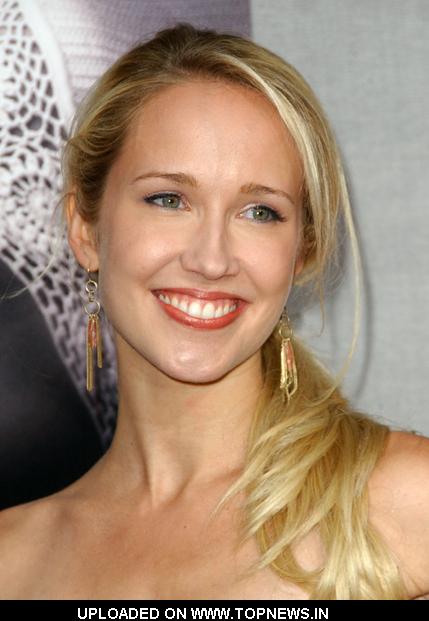

Left: Anna Camp; Right: Jessy Schram
Sunday, March 29, 2009
Hollywood to Israelis and Arabs: You're All the Same to Us
A few days ago I watched an episode of "Desperate Housewives" featuring the character Yaniv, an Israeli fitness trainer who uses boot camp tactics on women trying to lose weight. He looked like he could be Israeli, but his accent was off. Curious, I went on-line and checked if he was really an Israeli actor. Turns out his name is TJ (Tarek Jafar) Ramini, and he's a British actor of Palestinian descent. I found this amusing.
The running joke in Israel about Israeli actors trying to make it big in Hollywood is that they are only cast as Arabs, usually terrorists. So, in this instance, the situation is the exact opposite: an Arab playing an Israeli.
There are enough Israeli actors in the States to play Israeli characters and I'm sure there are enough Arab actors in Los Angeles to play Arab characters, but still Hollywood groups them together. Is that a covert pro-peace message: you're all the same anyway, so just get your shit together already?
The running joke in Israel about Israeli actors trying to make it big in Hollywood is that they are only cast as Arabs, usually terrorists. So, in this instance, the situation is the exact opposite: an Arab playing an Israeli.
There are enough Israeli actors in the States to play Israeli characters and I'm sure there are enough Arab actors in Los Angeles to play Arab characters, but still Hollywood groups them together. Is that a covert pro-peace message: you're all the same anyway, so just get your shit together already?
Saturday, March 28, 2009
Filling the Gaps of Battlestar Galactica
It isn't often that I need to include a spoiler warning in my posts, but this time I do. If you haven't watched the series finale of Battlestar Galactica and don't want to find out what happens then read no further.
SPOILER AND GEEK ALERT!
SPOILER AND GEEK ALERT!
Well, weirdly, somehow the final episode was at once very satisfying and very unsatisfying. The battle portion was great. Even most of the Earth part was good. We said goodbye to the characters in an emotionally satisfying way, although the idea of the Colonials being the source of Greek mythology makes no sense, considering the fact that they arrived about 140,000 years before the emergence of Greek myths. Also, the whole "God did it" thing is unsatisfying. There were so many unaswered questions here (like what's the connection between the Lords of Kobol and the Cylon God). Maybe some of this will be addressed in the prequel Caprica, but I doubt it.
Anyway, I made up my own answers for the unanswered questions. I used some background from the original series and shifted it around to suit me. Here's a time-line:

- 22,000 BCH (Before Cylon Holocaust): A reptilian race in a far away galaxy creates robots which rebel against them and wipe them out completely. The robots then go on to attack Humania, the only other inhabited planet in that galaxy. A one thousand year war begins.
- 21,000 BCH: The Humanians, a humanoid race (though not human), create their own robots to help them in their war. However, their own robots turn against them and join the original robots. The war ends in mutual annihilation, with all robots destroyed completely, and of the Humanians only 50 people aboard the Starship Kobol survive. They see that their race cannot survive through regular reproduction, so they invent resurrection technology.
- 20,000 BCH: Humanians settle upon a planet in the Milky Way Galaxy. They name it after their ship, Kobol.
- 18,000 BCH: Humanians find our Earth and primitive homo sapiens. For some reason, they decide that genetically engineering biological creatures would be safer than building robots, so they take a few thousand bone samples and try to guess how they'd naturally evolve. They call the homo sapiens Humans, after their original planet. They place them on twelve different locations on Kobol, which would later become the basis for the twelve tribes. The Humanians come to be known as the Lords of Kobol and are thought to be gods by the humans.
- 4,400 BCH: El, one of the few offspring of the original 50 Lords of Kobol, is born.
- 4,100 BCH: Humans create Cylons. The LOK are pissed, but El convinces them not to do anything.
- 4,000 BCH: A human scientist discovers that Cylon resurrection technology can be used on humans as well. The Lords of Kobol kill him before he can announce his discovery and prevent him from downloading into a new body. They decide to banish the Cylons. El is furious and leaves Kobol with them. Also joining him are five human priests who worship the Lords of Kobol.
- A few months later: The Temple of Hopes in established, where the Cylons and the five human priests pray to the Gods. They later find Cylon Earth. A few homesick Cylons take the last remaining FTL-capable ships and return to Kobol. They are the source of the information on Kobol about Earth and the Temple of Hopes. However, the LOK distort the story and make it sound as if El made the Cylons create the temple for himself and the five priests. He would use this distortion a few centuries later to reveal the identities of the Final Five (who don't really have anything to do with the five priests).
- 2,000 BCH: The Cylons create robots who attack them. The humanoids and the robots destroy each other. El, though, saw it coming because of the previous encounters with robots, so he warned the Final Five. He builds an FTL-capable ship for them, but the Lords of Kobol destroy it, so the Final Five must use a subluminal ship.
- Meanwhile, El returns to Kobol, and the Lords of Kobol, in their panic, decide to banish the twelve tribes (plus the remnants of the Cylons who returned to Kobol, which is why sometimes it is said that the 13 tribes left at this time). Athena, who disagrees with this decision, disables her own ability to resurrect and commits suicide.
- 1,990 BCH: A solar system with 12 inhabitable planets is discovered by the 12 human tribes. Meanwhile, the Kobolian Cylons go in search of Earth. Unfortunately for them, they never find it and die out.
- Towards the end of the first Cylon war, the final five finally reach Kobol, but find it abandoned. They mysteriously find a ship identical to their own orbiting the planet. They discover it is a jump-capable ship with the coordinates to humanity's current location. The Lords of Kobol, who had come to regret their actions of 2,000 years earlier, are the ones who secretly provided the ship.
- The Lords of Kobol and El partially reconcile. They both manipulate humanity, sometimes with the same goals in mind, sometimes with conflicting goals.
- When Kara Thrace is killed in the maelstrom, the LOK recreate her body and viper on Earth, and then downloads her into a new body. El, on the other hand, is the one who turns on four of the Final Five with the music.
- When the Colonials reach our Earth, the Lords of Kobol make her see her father one last time, and he tells her it is her time to go. She says so to Lee and disappears. She's actually taken to the LOK's ship, because they believe she deserves an explanation for everything that happened. She dies on the ship and is taken to Kobol to be buried.
- Colonial culture was lost, and all we got from them is DNA. However, the LOK manipulate things so that their names come up in Greek mythology.
- Head Six and Head Balter in Times Square don't really exist. It is just a representation of El's internal thoughts, using the images he made Caprica-Six and Baltar see. He himself has a side of him who thinks humanity will succeed and one side that thinks they won't. He's also joking with himself about how people see him as a god.
Thursday, November 13, 2008
No Cookies For the Cookie Monster
Kristina Chew of Autism Vox reports that Cookie Monster now eats vegetables. He has a cookie once in a while, but what he eats on a daily basis comes out of Mother Earth. Have the producers of Sesame Street gone crazy? I can't even imagine him eating health food. The rates of overweight and obese children in the United States are very high, but is this the way to deal with it? Is Cookie Monster, in his cookie-eating form, a bad influence?
I loved Cookie Monster as a child. I also loved eating cookies. One didn't have anything to do with the other. I bet my love for sweets came along way before I ever watched Sesame Street. And if you think of it, the furry blue muppet never ate the cookies, he just made a mess out of their crumbs. How many children actually imitate him like that?
As a person who grew up watching two versions of Sesame Street in two different languages in two different countries (Israel and the US), I have a request: Bring back the "cookie" into Cookie Monster. If you want to teach children about nutrition, which is not a bad idea at all, bring in a new character for that purpose.
I wonder if Ugifletzet, the Israeli version of Cookie Monster, has also gone vegetarian. My nephew and niece would probably know.
I loved Cookie Monster as a child. I also loved eating cookies. One didn't have anything to do with the other. I bet my love for sweets came along way before I ever watched Sesame Street. And if you think of it, the furry blue muppet never ate the cookies, he just made a mess out of their crumbs. How many children actually imitate him like that?
As a person who grew up watching two versions of Sesame Street in two different languages in two different countries (Israel and the US), I have a request: Bring back the "cookie" into Cookie Monster. If you want to teach children about nutrition, which is not a bad idea at all, bring in a new character for that purpose.
I wonder if Ugifletzet, the Israeli version of Cookie Monster, has also gone vegetarian. My nephew and niece would probably know.
Sunday, April 06, 2008
My BSG Theory: Colonials Are Robots, Too
Beware! Geeky Battlestar Galactica theorizing ahead, as well as possible spoilers for whoever hasn't seen the entire first three seasons.
It is now a common theory to say that humans came from Earth to Kobol and not the other way around, but I don't think this is the whole story. The saying "All this has happened before and all this will happen again" leads me to believe that the Colonials are either actually descendants of humanoid robots or of human-robot hybrids.
Humans on Earth created robots, which I will call Earthbots to distinguish them from the present-day Cylons. The Earthbots rebelled and left Earth. Later, they developed humanoid-biological models who took over Earthbot society, eventually discarding the mechanical models and losing the ability to download into a new body. After a few centuries most of their descendants forgot their Earthbot roots and started calling themselves human. Only a select few, later to be known as the Lords of Kobol, were entrusted with the secret origin of "humanity" and with the ability to download, thus achieving immortality.
The Cylon god is a Lord of Kobol who wished to reveal the secrets and grant immortality to all colonials. The other Lords banished him and his followers to protect their secrets, and outlawed his worship. He became The One Whose Name Cannot Be Spoken. The five priests of the Temple of Five are actually this god (the Final Cylon) and his four main supporters (the four of the Final Five already revealed). These are what would later be known as the 13th tribe, which starts wandering across the galaxy separately from the rest. Shortly thereafter the twelve tribes settle on Kobol. Several centuries later, the 13th tribe finds Kobol as well and asks to settle there, sparking a war that would result in the Exodus to the twelve colonies and the annihilation of the 13th tribe, except for the five priests.
Two thousands years later, the Colonials, who still think they are humans despite being Earthbots (or the descendants thereof) create the Cylons. The Cylons rebel. They leave the Colonies, however they have extensive knowledge of Colonial religion, and they start worshipping the hated Lord of Kobol. They distort the message of this god, believing he wished to destroy humanity. He somehow discovers this and wishes to thwart their plans, however he doesn't think they'll believe him if he shows up and says "hi, I'm your Lord God", so instead he somehow manages to get himself and his four priests accepted as five of the 12 humanoid Cylon models, as counterweights to the 7 militant Cylons. He implants the four into Colonial society without them knowing who they are. Because the two sets of Cylons (or rather the seven Cylons and the five Earthbots) don't communicate with each other, the Lord of Kobol is unable to prevent the destruction of the Colonies, but he is determined to prevent the destruction of "Colonial humanity" by reuniting it with the "original humanity" of Earth.
I'm most likely way off about details like the origin of the Final Five and the Cylon god, but I'll be surprised if my basic premise - the robotic origin of the colonials - turns out to be wrong.
It is now a common theory to say that humans came from Earth to Kobol and not the other way around, but I don't think this is the whole story. The saying "All this has happened before and all this will happen again" leads me to believe that the Colonials are either actually descendants of humanoid robots or of human-robot hybrids.
Humans on Earth created robots, which I will call Earthbots to distinguish them from the present-day Cylons. The Earthbots rebelled and left Earth. Later, they developed humanoid-biological models who took over Earthbot society, eventually discarding the mechanical models and losing the ability to download into a new body. After a few centuries most of their descendants forgot their Earthbot roots and started calling themselves human. Only a select few, later to be known as the Lords of Kobol, were entrusted with the secret origin of "humanity" and with the ability to download, thus achieving immortality.
The Cylon god is a Lord of Kobol who wished to reveal the secrets and grant immortality to all colonials. The other Lords banished him and his followers to protect their secrets, and outlawed his worship. He became The One Whose Name Cannot Be Spoken. The five priests of the Temple of Five are actually this god (the Final Cylon) and his four main supporters (the four of the Final Five already revealed). These are what would later be known as the 13th tribe, which starts wandering across the galaxy separately from the rest. Shortly thereafter the twelve tribes settle on Kobol. Several centuries later, the 13th tribe finds Kobol as well and asks to settle there, sparking a war that would result in the Exodus to the twelve colonies and the annihilation of the 13th tribe, except for the five priests.
Two thousands years later, the Colonials, who still think they are humans despite being Earthbots (or the descendants thereof) create the Cylons. The Cylons rebel. They leave the Colonies, however they have extensive knowledge of Colonial religion, and they start worshipping the hated Lord of Kobol. They distort the message of this god, believing he wished to destroy humanity. He somehow discovers this and wishes to thwart their plans, however he doesn't think they'll believe him if he shows up and says "hi, I'm your Lord God", so instead he somehow manages to get himself and his four priests accepted as five of the 12 humanoid Cylon models, as counterweights to the 7 militant Cylons. He implants the four into Colonial society without them knowing who they are. Because the two sets of Cylons (or rather the seven Cylons and the five Earthbots) don't communicate with each other, the Lord of Kobol is unable to prevent the destruction of the Colonies, but he is determined to prevent the destruction of "Colonial humanity" by reuniting it with the "original humanity" of Earth.
I'm most likely way off about details like the origin of the Final Five and the Cylon god, but I'll be surprised if my basic premise - the robotic origin of the colonials - turns out to be wrong.
Wednesday, March 26, 2008
HBO's Abigail Adams
And now for a silly question about the new mini-series "John Adams": why, oh, why, did HBO decide to disguise David Morse with a fake nose to make him look like George Washington, yet did not apply uglying makeup and a fake nose to Laura Linney's face? Abigail Adams was an impressive woman and Linney portrays her impressively, but Adams was quite an ugly woman and Laura Linney is beautiful.


Of course, George Washington's face is iconic, while nobody but history buffs (and those who read her entry in Wikipedia) knows how Abigail Adams looked. Also, audiences tolerate unattractive men much more than they tolerate unattractive women.
Anyway, here are Abigail Adams and Laura Linney. See a difference?


Just one important point: never ever base a post on one single piece of information as I am doing here (one picture, in this case). Who knows, maybe Abigail Adams was a looker after all.
Wednesday, October 10, 2007
Bad Movies, Free of Charge
Israeli satellite TV company Yes has opened up its pay-per-view service, DVDBox, to all customers for free. This comes as compensation for serious disruptions in service in some parts of the country. Fortunately for me, I have not experienced these disruptions at all but I still get free access to DVDBox. All in all, I can't complain, though those who actually couldn't watch television for whole days certainly can.
I expected to find the best movies playing on DVDBox. After all, these are movies that should be worth paying extra for, the cream of the crop, right? Wrong. There are some good movies, like "The Illusionist", "Children of Men", and "Alpha Dog", as well as a few children's movies that might be good. Other than that, I found most of the movies to be worse than those on the usual movie channels. First, there was the hour and a half I wasted on "The Contract", a stupid movie making absolutely no use of the talents of its two wonderful actors, Morgan Freeman and John Cusack. I later learned it was a direct-to-video flick. There were other stupid movies which I didn't even watch - "Step Up", Paris Hilton's "Pledge This", "Stick it" and "End Game".
Anyway, broadcasts are still being disrupted in other areas of Israel. Foreign spy ships have been mentioned as possible culprits, though oddly enough, they're Dutch ships. The folks at Yes have promised that further compensation will be given to customers, and again, I hope to benefit from the woes of others, getting compensated for something that didn't happen to me. I'm thinking free access to all channels for 3 months would ease my non-suffering just fine.
I expected to find the best movies playing on DVDBox. After all, these are movies that should be worth paying extra for, the cream of the crop, right? Wrong. There are some good movies, like "The Illusionist", "Children of Men", and "Alpha Dog", as well as a few children's movies that might be good. Other than that, I found most of the movies to be worse than those on the usual movie channels. First, there was the hour and a half I wasted on "The Contract", a stupid movie making absolutely no use of the talents of its two wonderful actors, Morgan Freeman and John Cusack. I later learned it was a direct-to-video flick. There were other stupid movies which I didn't even watch - "Step Up", Paris Hilton's "Pledge This", "Stick it" and "End Game".
Anyway, broadcasts are still being disrupted in other areas of Israel. Foreign spy ships have been mentioned as possible culprits, though oddly enough, they're Dutch ships. The folks at Yes have promised that further compensation will be given to customers, and again, I hope to benefit from the woes of others, getting compensated for something that didn't happen to me. I'm thinking free access to all channels for 3 months would ease my non-suffering just fine.
Subscribe to:
Posts (Atom)


